

Described by the company as its most versatile EV load aggregation solution to date, Cascade enables optimised charging and discharging across a wide range of assets — from residential chargers to electric school bus fleets. The platform addresses growing concerns among utilities around managing rising EV demand while unlocking the grid services potential of EV batteries.
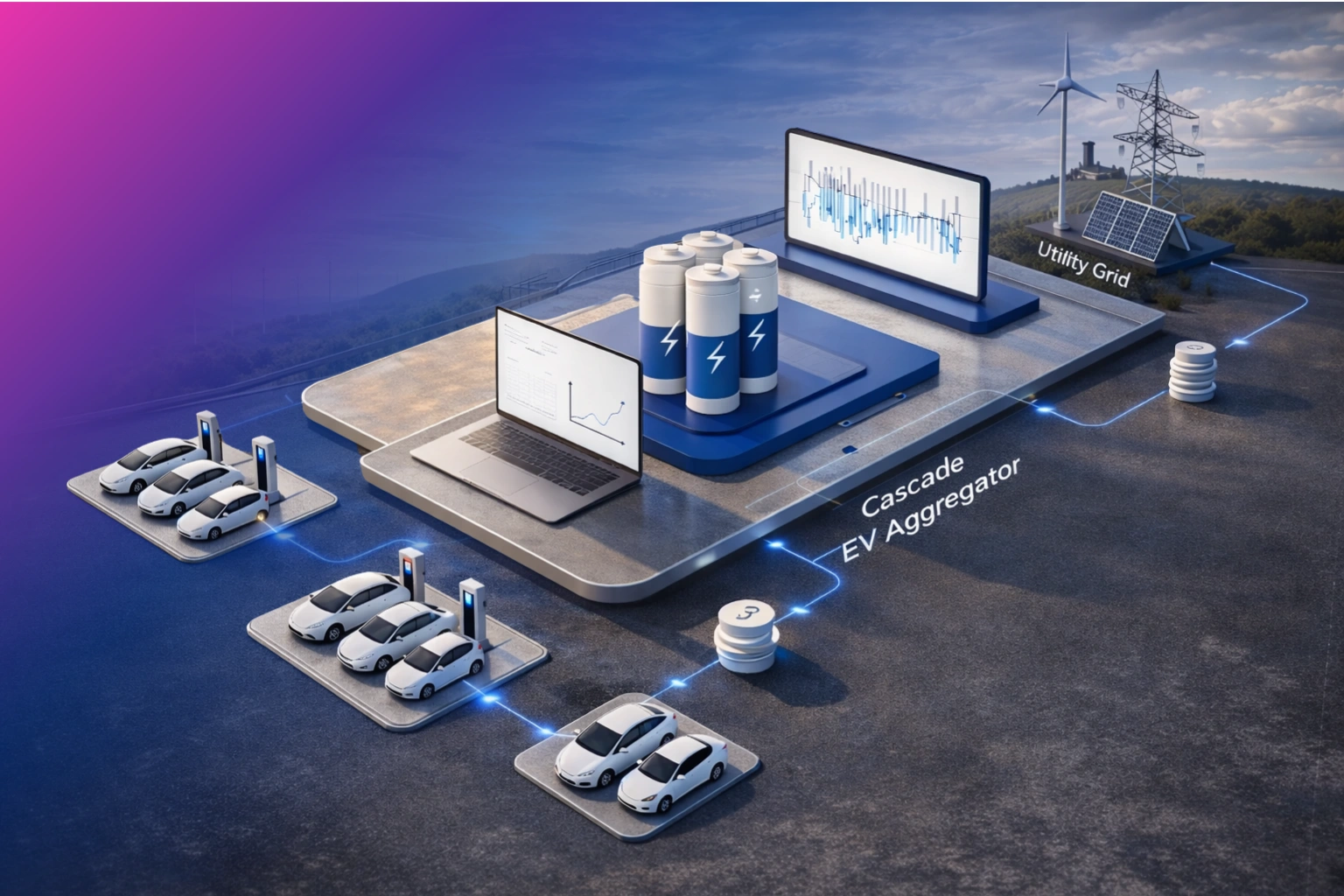
Cascade EV Aggregator operates as an intermediary layer between utilities and distributed EV charging infrastructure. By creating individualised charging plans, the platform balances grid requirements with vehicle mobility needs, helping utilities maintain reliability while supporting the rapid expansion of electric mobility.
According to Russell Vare, Vice President of Vehicle-Grid Integration at The Mobility House North America, the platform plays a critical role in modern grid operations.
“Cascade provides a critical aggregation layer and optimisation that coordinates charging activities to enable EVs to participate in virtual power plants,” Vare said. “This is a powerful tool that enables vehicles to deliver flexibility to the grid at scale, making homes and businesses more energy- and financially resilient.”
Technically, Cascade supports both unidirectional smart charging for load shifting and bidirectional V2G operations that allow EV batteries to export power back to the grid. The system receives real-time signals from utilities or market programs and translates them into optimised charging schedules across thousands of sites. These aggregated responses deliver essential grid services, including demand response, dynamic rate optimisation, and grid constraint management.
The launch builds on The Mobility House’s established foundation in V2G and V2X integration technologies. The company previously collaborated with SiGENERGY to publish a white paper identifying vehicle-to-everything (V2X) as a cornerstone of energy flexibility, demonstrating the technical foundation underlying Cascade’s development.
Cascade represents an evolution of the company’s existing ChargePilot charge management system. While ChargePilot focuses on fleet-level charging optimisation, Cascade operates at the utility scale — coordinating multiple charge management systems across service areas to create grid-level flexibility without disrupting established fleet operations.
Currently, the platform is enabling V2G participation for electric school bus fleets operating in California, Massachusetts, and New York. These real-world deployments validate the platform’s ability to balance transportation requirements with grid service delivery at scale.
The Mobility House’s broader track record includes strategic partnerships with global automakers, utilities, and technology providers, reinforcing its role at the forefront of electric vehicle infrastructure, smart energy systems, and grid-scale innovation.
Innovations such as EV load aggregation, vehicle-to-grid integration, smart charging, and AI-driven energy optimisation are shaping the future of sustainable transportation and clean energy infrastructure. These technologies — spanning electric vehicles, utilities, smart grids, and digital energy platforms — will be central to discussions at EVIS America 2026, taking place November 3–5, 2026, in Toledo, Ohio.
As the Global Stage for the Future of Mobility, EVIS America brings together mobility leaders, utilities, policymakers, OEMs, investors, and technology innovators to accelerate the transition toward next-generation mobility solutions, energy resilience, and sustainable transport systems across North America and beyond.
Learn more and be part of shaping the future of mobility:
https://bit.ly/46b3XK7