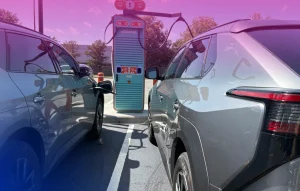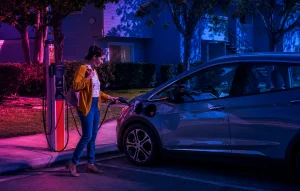




Recent data indicates a significant increase in online searches for electric vehicles in the United States, with interest rising by more than 20 percent as oil prices approach the $100 per barrel mark. In some cases, demand signals are even stronger, with searches for specific models such as the Tesla Model Y more than doubling over the same period.
This pattern reflects a familiar but increasingly important dynamic. When fuel prices rise, the economics of vehicle ownership shift quickly. Unlike abstract cost comparisons, gasoline prices are highly visible, updated daily, and directly felt by consumers. As a result, they have a disproportionate influence on purchasing behavior.
What makes the current moment different from previous cycles is the maturity of the EV market.
In earlier periods of oil price volatility, adoption was constrained by limited model availability, underdeveloped charging infrastructure, and a relatively small base of early adopters. Today, those barriers have significantly diminished. The U.S. market now offers a broad range of electric vehicles across multiple segments and price points, supported by a growing charging network and a more developed secondary market for used EVs.
This evolution is enabling a wider group of consumers to consider electric mobility as a practical alternative, not just a future-facing choice.
At the same time, rising fuel costs are already having a measurable impact on spending. In the United States, consumers are experiencing increased weekly expenditure on gasoline, reinforcing the financial case for switching to electric vehicles. As these cost pressures persist, interest is expected to translate into stronger demand across both new and used EV markets.
Beyond consumer behavior, the implications extend to global energy systems.
Electric vehicle adoption is already contributing to a reduction in oil demand, with estimates suggesting that EVs displaced millions of barrels of oil consumption per day last year. This trend is expected to accelerate in the coming years as adoption scales further across passenger vehicles and other transport segments.
Electric mobility beyond cars is also playing a role. The increasing use of battery-powered two- and three-wheelers is contributing to significant daily reductions in oil consumption, particularly in high-density urban markets. At a global level, countries with higher EV penetration are beginning to realize substantial economic savings by reducing reliance on imported fuel.
However, the current landscape is not without complexity.
Some automakers in the United States are adjusting their EV strategies, slowing or revising certain programs in response to market conditions and investment considerations. This creates a dynamic environment where short-term industry decisions may contrast with longer-term demand signals driven by energy economics.
Despite this, the underlying direction remains consistent. As fuel prices fluctuate, they continue to act as a powerful trigger for consumer reconsideration. In a market where cost, convenience, and reliability are increasingly aligned, electric vehicles are becoming a more compelling proposition for a broader audience.
The shift is no longer driven solely by environmental priorities. It is being reinforced by economics.
As fuel prices continue to influence consumer behavior and reshape vehicle ownership decisions, the transition to electric mobility is becoming increasingly driven by economics as much as sustainability.
This shift is creating new opportunities across the U.S. mobility landscape, from automakers and charging providers to investors and energy stakeholders, all responding to a market that is becoming more responsive to real-world cost pressures.
EVIS America 2026, 03 – 05 November 2026 taking place in Toledo, Ohio, will explore how these market forces are accelerating adoption, with a focus on demand signals, pricing dynamics, and the evolving relationship between energy markets and mobility—bringing together the stakeholders shaping how this transition unfolds in practice.
Source: https://evcentral.com.au/oil-price-rise-driving-global-ev-surge-including-the-usa/