
Interoperability is the difference between availability and usability. It is what ensures that drivers can charge anywhere, without friction, uncertainty, or failure.
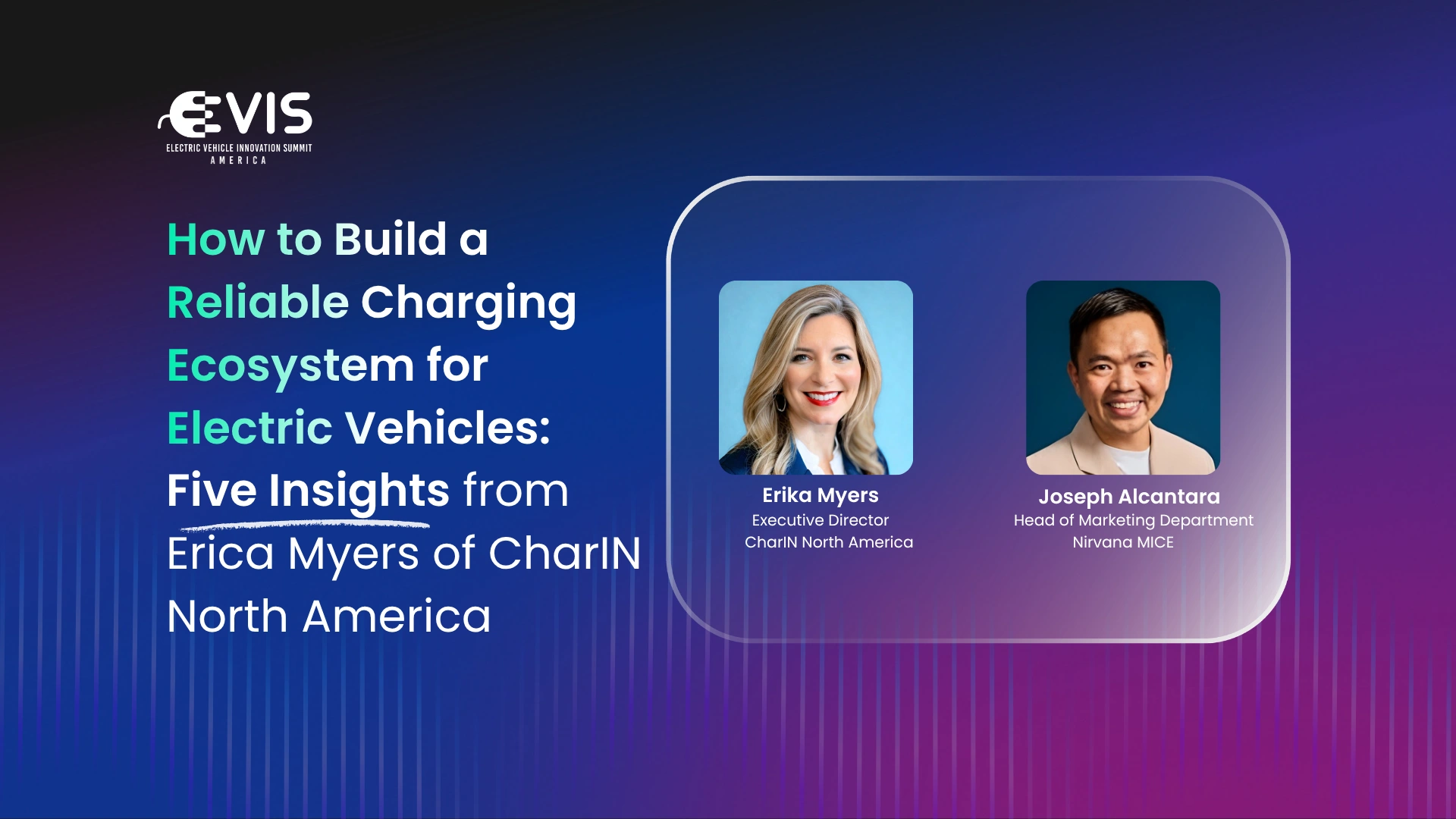
To understand how this plays out at scale, I spoke with Erika Myers, Executive Director of CharIN North America, a leading voice shaping open standards and cross-network alignment in EV charging.
Key takeaways from the episode
1) Charging does not scale without interoperability
A central theme throughout the discussion: infrastructure alone does not guarantee access.
At a system level, EV charging only works when vehicles, networks, and platforms communicate seamlessly. Without interoperability, the experience becomes fragmented, creating uncertainty for drivers and slowing adoption.
This is where many markets face friction. Different standards, inconsistent protocols, and varying levels of implementation introduce complexity into what should be a simple interaction.
Bottom line: building more chargers is not enough. They need to work together.
2) Reliability is built through alignment, not just technology
Erika emphasized a critical point: charging reliability is not a single-point issue.
It is the result of how well multiple components align, including:
Standards and protocols
Hardware and software integration
Network communication
Payment and authentication systems
Progress is being made. Fast-charging reliability across North America has improved significantly, with reported uptime exceeding 90 percent. But gaps remain, particularly in areas like payment, where friction still impacts the user experience.
The takeaway is clear: reliability is a system outcome, not a product feature.
3) Testing is where interoperability becomes real
One of the most practical insights from the conversation was the role of testing.
Interoperability cannot be assumed. It has to be validated under real-world conditions, across different vehicles, chargers, and software environments.
Through industry-led testing events, stakeholders come together to identify issues, refine standards, and ensure that systems work as intended before large-scale deployment.
This is where alignment shifts from theory to execution.
A useful reframe from the episode: interoperability is proven in testing, not in specifications.
4) Standards only matter if the ecosystem moves together
A recurring message was that standards alone do not solve fragmentation.
They need to be adopted, implemented, and continuously refined across the ecosystem. That requires coordination between OEMs, charging providers, policymakers, and technology platforms.
Erika highlighted how initiatives like ISO 15118, including plug and charge capabilities, can significantly improve the charging experience by simplifying authentication and reducing reliance on external payment systems.
But adoption is uneven. The challenge is not the absence of solutions. It is the pace of alignment.
For stakeholders, this reinforces a key point: progress depends on collective execution, not isolated innovation.
Why this conversation matters for EVIS
EVIS exists to move the industry beyond isolated advancements and toward coordinated delivery.
Interoperability sits at the center of that mission. It connects infrastructure, policy, technology, and user experience into a system that can scale with confidence.
This episode reflects the kind of dialogue EVIS brings to the forefront, where industry leaders address not just what needs to be built, but how it needs to work together.
If you are working on:
EV charging infrastructure and networks
EV manufacturing and system integration
Policy and regulatory frameworks
Energy systems and grid integration
Customer experience and charging reliability
Then this is the level of alignment required to move from rollout to real adoption.
Join the conversation
Erika Myers will be part of EVIS America 2026, where stakeholders across the U.S. market come together to address the practical realities of scaling EV infrastructure.
If the goal is not just deployment, but dependable performance at scale, this is the conversation that matters.